
Waste lead batteries - List of Manufacturers, Suppliers, Companies and Products | IPROS

Waste lead batteries Product List

1~30 item / All 35 items

Displayed results

[Information] To avoid losses in the processing of waste lead batteries.

Explaining the differences between industrial waste disposal and valuable transactions, and the concept of total cost in an easy-to-understand manner!

This document is a guide on industrial waste and recycling to avoid losses in the processing of waste lead batteries. It provides detailed information on the two processing methods for waste lead batteries and the concept of total cost in valuable transactions. It also introduces the flow of choosing processing methods and contractors, so please take a moment to read it. [Contents] ■ Do you have any of these concerns? ■ There are two processing methods for waste lead batteries ■ It is important to consider "total cost" even in valuable transactions ■ Flow of choosing processing methods and contractors ■ Features of Daiseki MCR ■ Summary *For more details, please download the PDF or feel free to contact us.

  • Other Batteries
  • Waste lead batteries

Added to bookmarks

Bookmarks list

Bookmark has been removed

Bookmarks list

You can't add any more bookmarks

By registering as a member, you can increase the number of bookmarks you can save and organize them with labels.

Free membership registration

[Information] Accident Risks During the Storage of Waste Lead Batteries

Introducing the accident risks associated with storing waste lead batteries and the management points that responsible personnel should be aware of!

This document is an environmental and safety management resource summarizing the risks of accidents during the storage of waste lead batteries. It provides detailed information on potential troubles that may occur during storage and the causes of accidents. It also introduces checkpoints for storage and risk reduction measures, so please take a moment to read it. 【Contents】 ■ Troubles that may occur during storage ■ Reasons why accidents occur ■ Checkpoints for storage ■ Risks in the event of an accident ■ Risk reduction measures proposed by Daiseki MCR ■ Summary *For more details, please download the PDF or feel free to contact us.

  • Other Batteries
  • Waste lead batteries

Added to bookmarks

Bookmarks list

Bookmark has been removed

Bookmarks list

You can't add any more bookmarks

By registering as a member, you can increase the number of bookmarks you can save and organize them with labels.

Free membership registration

Acceptance of waste batteries and lead-acid batteries for automotive maintenance.

We handle all areas of Kanto! Leave the disposal of waste batteries and valuable purchases to us.

In the automotive maintenance industry, proper handling of waste batteries generated during battery replacement is required. Consideration for the environment, as well as compliance with laws and regulations, is important. Improper handling can lead to environmental pollution and legal issues. Our company consistently manages the collection and processing of waste lead batteries, reducing the burden on our customers. We also offer valuable purchase options without the need for a manifest. 【Usage Scenarios】 - During battery replacement at automotive maintenance shops - During battery replacement at car dealerships - During collection at battery retail stores 【Benefits of Implementation】 - Reduction of effort and costs associated with waste battery processing - Risk avoidance through legal compliance - Potential for revenue generation through valuable purchases

  • Other Batteries
  • Waste lead batteries

Added to bookmarks

Bookmarks list

Bookmark has been removed

Bookmarks list

You can't add any more bookmarks

By registering as a member, you can increase the number of bookmarks you can save and organize them with labels.

Free membership registration

Acceptance of waste batteries and lead-acid batteries for motorcycles.

Leave your motorcycle's used batteries to Daiseki MCR!

In the motorcycle industry, consideration for the environment and proper waste disposal are required. In particular, improper disposal of batteries can lead to soil contamination and waste of resources. Our company specializes in the processing of used lead batteries to reduce environmental impact. We also offer collection services with our own trucks throughout the Kanto region, as well as in Niigata, Yamanashi, Shizuoka, Nagano, Fukushima, and Miyagi. We can dispose of any type of lead battery, regardless of the manufacturer, so please contact us. 【Usage Scenarios】 - Motorcycle dealerships - Motorcycle repair shops - Motorcycle dismantling businesses - Individual customers 【Benefits of Implementation】 - Proper waste disposal by specialized contractors - Reduction of environmental impact - Possible purchase of valuable materials if a manifest is not required

  • Other Batteries
  • Waste lead batteries

Added to bookmarks

Bookmarks list

Bookmark has been removed

Bookmarks list

You can't add any more bookmarks

By registering as a member, you can increase the number of bookmarks you can save and organize them with labels.

Free membership registration

Acceptance of waste batteries and lead-acid batteries for solar power generation.

Leave the processing of solar power system batteries and lead batteries to us!

In the solar power generation industry, proper handling of lead batteries is required in conjunction with the maintenance and updating of storage systems. In particular, environmental considerations and cost efficiency are important challenges. Improper handling can increase the risk of environmental pollution and may lead to violations of regulations. Our company consistently handles the collection and recycling of waste lead batteries, reducing environmental impact. We also offer valuable purchases that do not require a manifest. 【Usage Scenarios】 - When replacing storage batteries in solar power generation systems - During maintenance of storage systems - When disposing of lead batteries 【Benefits of Implementation】 - Reduction of environmental impact - Compliance with regulations - Potential cost savings

  • Other Batteries
  • Waste lead batteries

Added to bookmarks

Bookmarks list

Bookmark has been removed

Bookmarks list

You can't add any more bookmarks

By registering as a member, you can increase the number of bookmarks you can save and organize them with labels.

Free membership registration

Acceptance of waste batteries and lead-acid batteries for agriculture

Old tractor batteries go to Daiseki MCR!

In the agricultural sector, proper handling of lead batteries used in various machines, including tractors, is required. Improper disposal of used lead batteries can lead to environmental pollution. Our company processes lead batteries, which are classified as specially controlled industrial waste, contributing to environmental conservation. [Usage Scenarios] - When replacing tractor batteries - When disposing of batteries from agricultural machinery [Benefits of Implementation] - Consideration for the environment - Compliance with laws and regulations - Risk reduction through proper disposal methods

  • Other Batteries
  • Waste lead batteries

Added to bookmarks

Bookmarks list

Bookmark has been removed

Bookmarks list

You can't add any more bookmarks

By registering as a member, you can increase the number of bookmarks you can save and organize them with labels.

Free membership registration

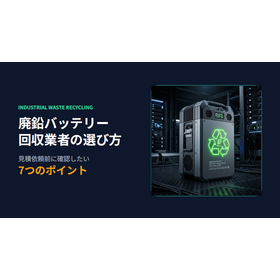
How to Choose a Waste Lead Battery Collection Service for UPS (Uninterruptible Power Supply)

Explaining 7 points to check before requesting a quote!

In backup applications for UPS (Uninterruptible Power Supply), a stable power supply is required. Therefore, the proper collection and disposal of used lead batteries is important for both maintaining the performance of the equipment and reducing environmental impact. Improper disposal can lead to risks of environmental pollution and violations of regulations. This document summarizes how to choose a waste lead battery collection company, clearly presenting common mistakes in vendor selection and seven key points to check, which will help solve your company's challenges. 【Usage Scenarios】 - The time to replace the UPS is approaching. - Struggling with how to dispose of waste lead batteries. - Seeking disposal methods that comply with environmental regulations. 【Benefits of Implementation】 - Risk avoidance through proper vendor selection. - Reduction of environmental impact. - Compliance with regulations.

  • Other Batteries
  • Waste lead batteries

Added to bookmarks

Bookmarks list

Bookmark has been removed

Bookmarks list

You can't add any more bookmarks

By registering as a member, you can increase the number of bookmarks you can save and organize them with labels.

Free membership registration

Guidelines for the Disposal of Waste Lead Batteries for Automotive Maintenance

Understand the difference between industrial waste disposal and valuable transactions, and achieve proper collection of waste lead batteries.

In the automotive maintenance industry, proper collection and processing of waste lead batteries emitted from vehicles is required. It is particularly important to optimize processing costs while balancing the reduction of environmental impact and compliance with regulations. Choosing the wrong processing method can lead to increased costs and risks of improper management. This document organizes the processing methods for waste lead batteries and points for selecting contractors, providing criteria for appropriate collection. 【Usage Scenarios】 - When you want to review the discharge flow of waste lead batteries - When you want to compare the cost structures of industrial waste processing and valuable transactions - When you need criteria for selecting a reliable processing contractor 【Benefits of Implementation】 - Deepens understanding of processing methods for waste lead batteries - Enables contractor selection based on total cost considerations - Helps in building an appropriate collection flow

  • Other Batteries
  • Waste lead batteries

Added to bookmarks

Bookmarks list

Bookmark has been removed

Bookmarks list

You can't add any more bookmarks

By registering as a member, you can increase the number of bookmarks you can save and organize them with labels.

Free membership registration

To avoid losses in the processing of waste lead batteries for transportation and logistics.

A explanatory document to understand the differences between industrial waste disposal and valuable transactions, aiming for the optimization of total costs.

In the transportation and logistics industry, proper handling of waste lead batteries generated from vehicle maintenance and the associated cost management are crucial. Choosing the wrong method of disposal can lead to missed profits and unnecessary costs. This document organizes the methods for disposing of waste lead batteries and the considerations for total costs in valuable transactions, and explains the key points for selecting the right service provider. 【Usage Scenarios】 - When disposing of waste batteries generated from vehicle replacements or maintenance - When considering a review of waste disposal costs - When it is necessary to select an appropriate recycling route 【Benefits of Implementation】 - Deepens knowledge about methods for disposing of waste lead batteries - Allows for a reevaluation of disposal methods from a total cost perspective - Clarifies the criteria for selecting service providers, enabling the establishment of an appropriate disposal system

  • Other Batteries
  • Waste lead batteries

Added to bookmarks

Bookmarks list

Bookmark has been removed

Bookmarks list

You can't add any more bookmarks

By registering as a member, you can increase the number of bookmarks you can save and organize them with labels.

Free membership registration

To avoid losses in the disposal of waste lead batteries for hospitals and medical facilities.

Explaining the key points for proper disposal and cost management of waste lead batteries, useful during the update of emergency power supplies.

In the management of emergency power supplies in hospitals and medical facilities, regular battery replacement is essential to maintain the reliability of the equipment. The waste lead batteries generated during replacement must be properly disposed of as industrial waste, and the methods of disposal and cost management during this process are important challenges. Improper disposal poses risks from a compliance perspective, so it is necessary to select appropriate vendors and understand the disposal flow. This document has been created to organize the methods of processing waste lead batteries and the considerations for total costs in valuable transactions, supporting proper management in facility operations. 【Usage Scenarios】 - When updating batteries for emergency generators or UPS (uninterruptible power supplies) - Reviewing the disposal costs of waste lead batteries - Establishing a proper waste disposal flow that complies with regulations 【Benefits of Implementation】 - Understanding the differences between disposal methods for waste lead batteries and valuable transactions - Clarifying the criteria for selecting vendors considering total costs - Improving the efficiency of management operations through the establishment of a proper disposal flow

  • Other Batteries
  • Waste lead batteries

Added to bookmarks

Bookmarks list

Bookmark has been removed

Bookmarks list

You can't add any more bookmarks

By registering as a member, you can increase the number of bookmarks you can save and organize them with labels.

Free membership registration

Guidelines for the Treatment of Waste Lead Batteries for Industrial Machinery Manufacturing

We understand the difference between industrial waste disposal and valuable transactions, and we support the optimization of resource circulation and cost management.

In the field of industrial machinery manufacturing, proper handling of waste lead batteries generated during manufacturing processes and maintenance inspections, as well as efforts towards resource recycling, are required. In particular, balancing environmental impact reduction with cost efficiency is an important management issue. If the method of disposal is chosen incorrectly, unnecessary costs may arise, or appropriate recycling may not be achieved. This document has been created to organize the methods for handling waste lead batteries and the concept of total costs in valuable transactions, in order to support your company's resource recycling efforts. 【Utilization Scenarios】 - Examination of proper disposal routes for waste lead batteries generated within the factory - Review and optimization of industrial waste disposal costs - Establishment of a recycling system aimed at reducing environmental impact 【Effects of Implementation】 - Clarification of the methods for handling waste lead batteries and the mechanisms for valuable transactions - Establishment of criteria for selecting vendors from the perspective of total costs - Advancement of concrete discussions aimed at promoting resource recycling

  • Other Batteries
  • Waste lead batteries

Added to bookmarks

Bookmarks list

Bookmark has been removed

Bookmarks list

You can't add any more bookmarks

By registering as a member, you can increase the number of bookmarks you can save and organize them with labels.

Free membership registration

To avoid losses in the disposal of waste lead batteries for railway vehicle maintenance.

Explaining the differences between industrial waste and valuable transactions in the disposal of railway vehicle waste batteries, as well as the concept of total cost.

In the field of railway vehicle maintenance, proper maintenance and updating of batteries that support the safe operation of vehicles is essential. When handling the disposal of waste lead batteries generated during updates, it is necessary not only to comply with legal regulations but also to select appropriate disposal methods from the perspective of asset management and optimize total costs. Incorrect selection of disposal methods can lead to financial losses and management risks. This document has been created to organize the disposal methods for waste lead batteries and the key points for selecting contractors, in order to support proper asset management. 【Usage Scenarios】 - During the disposal of waste batteries associated with regular inspections of railway vehicles - Formulating storage and disposal plans for waste batteries at vehicle bases and maintenance hubs - Reviewing and optimizing waste battery disposal costs 【Benefits of Implementation】 - Understanding the mechanisms of industrial waste disposal and valuable transactions, enabling the selection of appropriate disposal methods - Enhancing asset management efficiency by capturing processing costs in total - Clarifying criteria for selecting contractors and establishing a proper disposal system that complies with legal regulations

  • Other Batteries
  • Waste lead batteries

Added to bookmarks

Bookmarks list

Bookmark has been removed

Bookmarks list

You can't add any more bookmarks

By registering as a member, you can increase the number of bookmarks you can save and organize them with labels.

Free membership registration

Guidelines for the Disposal of Waste Lead Batteries for the Ship Repair Industry

A guide to understanding the differences between industrial waste disposal and valuable transactions, and achieving proper processing and cost management.

In the field of ship repair, proper handling of waste lead batteries generated during maintenance and compliance with environmental regulations are required. In particular, balancing appropriate waste management based on legal regulations with the optimization of processing costs is a significant challenge for business operations. Improper handling can lead to legal risks and increased costs, making the selection of contractors based on accurate knowledge essential. This document organizes the methods for processing waste lead batteries and the considerations for total costs, supporting your company in establishing a proper processing system. 【Usage Scenarios】 - Review of the processing flow for waste lead batteries generated at ship repair sites - Establishment of a waste management system aimed at strengthening environmental compliance - Clarification of criteria for selecting processing contractors 【Benefits of Implementation】 - Promotion of understanding regarding processing methods for waste lead batteries and legal requirements - Accurate calculation of total costs, including valuable transactions - Establishment of a reliable contractor selection process based on legal compliance

  • Other Batteries
  • Waste lead batteries

Added to bookmarks

Bookmarks list

Bookmark has been removed

Bookmarks list

You can't add any more bookmarks

By registering as a member, you can increase the number of bookmarks you can save and organize them with labels.

Free membership registration

Explanation materials for the processing of waste lead batteries for agricultural machinery sales.

Waste batteries generated from the maintenance of agricultural machinery. An explanation of proper disposal and cost optimization points.

In the field of agricultural machinery sales, many waste lead batteries are generated due to the maintenance and replacement of agricultural equipment. Properly handling these batteries is crucial from both a legal compliance perspective and a cost management perspective in business operations. Choosing the wrong disposal method can lead to unnecessary costs and increased management burdens. This document organizes the methods for disposing of waste lead batteries and the concept of total costs, including bulk collection, to support your company's operational efficiency. 【Usage Scenarios】 - Disposal of waste batteries generated from the maintenance or trade-in of agricultural equipment - Requests for bulk collection of waste batteries accumulated at stores or maintenance facilities - Review and optimization of waste battery disposal costs 【Benefits of Implementation】 - Clarifies the methods for disposing of waste lead batteries and criteria for selecting service providers - Enables understanding of the total cost concept, including valuable transactions - Helps in building a proper disposal flow based on legal regulations

  • Other Batteries
  • Waste lead batteries

Added to bookmarks

Bookmarks list

Bookmark has been removed

Bookmarks list

You can't add any more bookmarks

By registering as a member, you can increase the number of bookmarks you can save and organize them with labels.

Free membership registration

【For Golf Course Operations】Accident Risk Document for Storing Used Lead Batteries

This explains the accident risks associated with the storage of waste lead batteries at golf courses and key points for safety management.

In golf course management, the proper handling of waste lead batteries used in electric carts is important for ensuring safety within the facility and for environmental conservation. Even during storage on dedicated shelves, there is a possibility of issues arising from improper handling or aging deterioration. This document organizes the potential causes of accidents and risks that may occur during storage and summarizes the checkpoints for establishing a safe management system. 【Usage Scenarios】 - Review of storage locations for electric cart batteries within the golf course - Establishment of a safety management system during storage on dedicated shelves - Confirmation of proper disposal flow for waste batteries 【Benefits of Implementation】 - Understanding and preventing accident risk factors during storage - Improvement of operations through clarification of safety management checkpoints - Acquisition of knowledge related to environmental and safety management

  • Other Batteries
  • Waste lead batteries

Added to bookmarks

Bookmarks list

Bookmark has been removed

Bookmarks list

You can't add any more bookmarks

By registering as a member, you can increase the number of bookmarks you can save and organize them with labels.

Free membership registration

Accident Risk Document for Storing Waste Lead Batteries for Ship Repair

Explanation of accident risks and management points for storing waste lead batteries in a salt damage environment.

In the ship repair field, corrosion caused by salt damage accelerates the deterioration of equipment and materials. In particular, waste lead batteries are prone to terminal corrosion and case degradation when stored in environments containing salt, increasing the risk of accidents such as leakage and fire. To maintain a safe working environment, understanding proper storage management and risk reduction measures is essential. This document organizes the causes of potential troubles that may occur during the storage of waste lead batteries and the checkpoints that should be practiced on-site. 【Usage Scenarios】 - Inspection of temporary storage locations for waste batteries in ship repair yards - Establishment of waste management systems considering salt damage countermeasures - Creation of safety education and risk management manuals for workers 【Benefits of Implementation】 - Early identification of risk factors for accidents during storage - Improved safety on-site through the establishment of appropriate management systems - Compliance with environmental and safety standards in waste management

  • Other Batteries
  • Waste lead batteries

Added to bookmarks

Bookmarks list

Bookmark has been removed

Bookmarks list

You can't add any more bookmarks

By registering as a member, you can increase the number of bookmarks you can save and organize them with labels.

Free membership registration

Document on Accident Risks During Storage of Waste Lead Batteries for Communication Base Station Management

Safety management of communication base stations. Explaining the risks and countermeasures when storing waste lead batteries.

In the management of communication base stations, proper storage of waste lead batteries used as backup power sources is required. Especially within base stations, which can easily become enclosed spaces, thorough ventilation to prevent the accumulation of hydrogen gas and other gases is crucial, as improper management can lead to serious accidents such as fires or explosions. This document organizes the accident risks associated with the storage of waste lead batteries and summarizes key points for safety management. 【Usage Scenarios】 - Temporary storage of waste lead batteries within communication base stations - Inspection and review of ventilation systems in battery storage areas - Development of safety management manuals for storage locations 【Benefits of Implementation】 - Early detection of potential troubles during storage - Implementation of risk reduction measures through understanding the causes of accidents - Strengthening of safety management systems by clarifying checkpoints during storage

  • Other Batteries
  • Waste lead batteries

Added to bookmarks

Bookmarks list

Bookmark has been removed

Bookmarks list

You can't add any more bookmarks

By registering as a member, you can increase the number of bookmarks you can save and organize them with labels.

Free membership registration

Accident Risk Materials for Storing Waste Lead Batteries for Demolition Contractors

We will identify the storage risks of waste lead batteries generated at demolition sites and support the establishment of a safe management system.

In the demolition construction industry, proper handling of waste lead batteries generated during building demolition is required. In particular, there are concerns about the risk of accidents such as damage, leakage, and ignition due to short circuits caused by external impacts during transportation and storage. To ensure safety on-site and reduce environmental impact, knowledge of appropriate storage methods and risk management is essential. This document summarizes the causes of accidents and checkpoints during the storage of waste lead batteries, which can be used as guidelines for safety management. [Usage Scenarios] - Selection of temporary storage locations for waste lead batteries at demolition sites - Safety education for workers and creation of storage manuals - Consideration of storage space layout taking into account the risk of damage from impacts [Effects of Implementation] - Ability to identify risk factors for accidents during storage in advance and take preventive measures - Improvement of on-site safety through the establishment of appropriate management systems - Contribution to strengthening emergency response capabilities by understanding the risks in the event of an accident

  • Other Batteries
  • Waste lead batteries

Added to bookmarks

Bookmarks list

Bookmark has been removed

Bookmarks list

You can't add any more bookmarks

By registering as a member, you can increase the number of bookmarks you can save and organize them with labels.

Free membership registration

[For Industrial Waste Disposal Operators] Accident Risk Materials for Storing Waste Lead Batteries

This explains the key points for the safe storage management of waste lead batteries and the reduction of accident risks.

In the industrial waste disposal industry, proper environmental maintenance, including temperature control and heat insulation measures, is required for the storage of waste lead batteries. Particularly, storage under direct sunlight or in high-temperature environments can lead to unexpected troubles or accidents, making the establishment of a safety management system essential. This document organizes the risk factors during storage and summarizes checkpoints that can be utilized on-site, supporting the establishment of a safe operational system. 【Utilization Scenes】 - Environmental maintenance of outdoor and indoor storage areas for waste lead batteries - Consideration of heat insulation measures and temperature control for storage locations - Safety education and risk assessment for on-site personnel 【Effects of Implementation】 - Early detection and countermeasures for accident risk factors during storage - Improvement of on-site awareness through clarification of safety management checkpoints - Reduction of environmental and safety risks through the establishment of an appropriate storage system

  • Other Batteries
  • Waste lead batteries

Added to bookmarks

Bookmarks list

Bookmark has been removed

Bookmarks list

You can't add any more bookmarks

By registering as a member, you can increase the number of bookmarks you can save and organize them with labels.

Free membership registration

Acceptance of waste batteries and lead-acid batteries for UPS maintenance

Support for the entire Kanto region! For the collection and disposal of used UPS batteries, contact Daiseki MCR.

For operators engaged in the maintenance of UPS systems, the proper disposal of used lead batteries is an important issue from both environmental conservation and legal compliance perspectives. In particular, since UPS systems play a crucial role as backup power sources during power outages, the frequency of battery replacements is high, necessitating the establishment of an appropriate disposal system. Improper disposal can lead to environmental pollution and legal risks. Our company handles the disposal of lead batteries, which are classified as specially controlled industrial waste, and we accept the disposal of lead batteries used in UPS systems and others. 【Usage Scenarios】 * During UPS battery replacement * During UPS maintenance * During UPS disposal 【Benefits of Implementation】 * Legal compliance * Reduction of environmental impact * Reduction of effort and costs related to waste disposal

  • Other Batteries
  • Waste lead batteries

Added to bookmarks

Bookmarks list

Bookmark has been removed

Bookmarks list

You can't add any more bookmarks

By registering as a member, you can increase the number of bookmarks you can save and organize them with labels.

Free membership registration

Acceptance of waste batteries and lead-acid batteries for fisheries.

Discarded batteries from fishing power sources go to Daiseki MCR!

In the fishing industry, lead batteries are widely used as a power source in vessels and land-based facilities. Proper disposal of used lead batteries is essential. Improper disposal can lead to environmental pollution. Our company handles the disposal of lead batteries, which are classified as specially managed industrial waste, and we accept the disposal of lead batteries used in various equipment, regardless of application, including automobiles, industrial machinery, and UPS systems. We can dispose of any type of lead battery, whether sealed, vented, or from any manufacturer, so please contact us. 【Usage Scenarios】 * Battery replacement for fishing boats * Power battery replacement for land facilities * Battery replacement for fishing industry uninterruptible power supplies (UPS) 【Benefits of Implementation】 * Consideration for the environment * Compliance with regulations * Effective use of resources

  • Other Batteries
  • Waste lead batteries

Added to bookmarks

Bookmarks list

Bookmark has been removed

Bookmarks list

You can't add any more bookmarks

By registering as a member, you can increase the number of bookmarks you can save and organize them with labels.

Free membership registration

Acceptance of waste batteries and lead-acid batteries for golf courses.

Leave the disposal of golf cart batteries to Daiseki MCR!

At golf courses, battery replacement for golf carts occurs regularly, and proper disposal of used lead batteries is required. Consideration for the environment and compliance with waste disposal regulations are important issues in the operation of golf courses. Our company handles the disposal of lead batteries, which are classified as specially controlled industrial waste, and we accept the disposal of lead batteries used in various devices, regardless of their application, including automobiles, industrial equipment, and UPS systems. We can dispose of any type of lead battery, including sealed, vented glass, and UPS (case-by-case), regardless of the manufacturer, so please contact us. 【Usage Scenarios】 - When replacing golf cart batteries - Battery storage locations within the golf course 【Benefits of Implementation】 - Compliance with waste disposal regulations - Reduction of environmental impact - Possible purchase of valuable materials if a manifest is not required

  • Other Batteries
  • Waste lead batteries

Added to bookmarks

Bookmarks list

Bookmark has been removed

Bookmarks list

You can't add any more bookmarks

By registering as a member, you can increase the number of bookmarks you can save and organize them with labels.

Free membership registration

Acceptance of waste batteries and lead-acid batteries for electrical work and equipment.

We handle the entire Kanto region! Leave the disposal of waste batteries and valuable purchases to us.

In the electrical construction and equipment industry, proper disposal of used lead batteries is required. In particular, consideration for the environment and compliance with laws and regulations are important. Improper disposal can lead to environmental pollution and legal issues. Our company provides a consistent service from the collection to the processing of waste lead batteries, solving our customers' challenges. 【Usage Scenarios】 * Electrical equipment construction sites * Replacement of UPS (Uninterruptible Power Supply) * Battery replacement for various industrial equipment 【Benefits of Implementation】 * Contributes to legal compliance and reduction of environmental impact * Reduction of disposal costs (in the case of valuable purchases) * Safe disposal by specialized contractors

  • Other Batteries
  • Waste lead batteries

Added to bookmarks

Bookmarks list

Bookmark has been removed

Bookmarks list

You can't add any more bookmarks

By registering as a member, you can increase the number of bookmarks you can save and organize them with labels.

Free membership registration

Explanation of the Importance of Proper Disposal of Waste Lead Batteries for Broadcasting Media

Explaining the proper disposal of waste lead batteries, which are essential for maintaining information transmission.

In the broadcasting and media industry, lead-acid batteries are used in power supply equipment that is essential for maintaining information transmission. When these batteries are no longer usable, improper disposal, which poses environmental and corporate risks, is a significant concern. Improper disposal can lead to environmental pollution and violations of regulations, potentially affecting a company's reliability. This document is a white paper summarizing the importance of risk avoidance in the proper disposal of lead-acid batteries and the selection of legitimate channels. It includes explanations from three perspectives: the risks of improper disposal, environmental risks, and corporate risks associated with lead-acid batteries, as well as an overview of the consistent system and processing steps from collection to resource recovery by "Daiseki MCR." It also introduces compliance measures and stable resource recovery, so please make use of it. 【Usage Scenarios】 - Disposal of used lead-acid batteries from broadcasting equipment, communication devices, etc. - Compliance with environmental regulations and reduction of corporate risks - Achieving stable resource circulation 【Effects of Implementation】 - Avoidance of legal risks through compliance - Improvement of corporate image by reducing environmental impact - Safe and secure resource circulation through proper route selection

  • Other Batteries
  • Waste lead batteries

Added to bookmarks

Bookmarks list

Bookmark has been removed

Bookmarks list

You can't add any more bookmarks

By registering as a member, you can increase the number of bookmarks you can save and organize them with labels.

Free membership registration

Explanation of the Importance of Proper Disposal of Waste Lead Batteries for Corporations in the Medical and Welfare Sector

For business continuity. Proper disposal of waste lead batteries and risk avoidance.

In the healthcare and welfare industry, stable infrastructure operations and consideration for the environment are required to maintain business continuity. In particular, improper handling of waste lead batteries used for backup power can lead to environmental pollution and corporate risks. To prevent these risks in advance and continue business while complying with regulations, it is important to select a reliable proper disposal route. This document is a white paper summarizing the importance of risk avoidance in the proper disposal of waste lead batteries and the selection of legitimate routes. It includes explanations from three perspectives: the risks of improper disposal, environmental risks, and corporate risks associated with waste lead batteries, as well as an overview of the consistent system and processing steps from collection to resource recovery by "Daiseki MCR." [Usage Scenarios] - Management of lead batteries as backup power for medical devices - Proper disposal of lead batteries in emergency power supply equipment at welfare facilities - Balancing compliance with regulations and reducing environmental impact [Benefits of Implementation] - Reduction of risks in business continuity planning (BCP) - Reliable compliance with environmental regulations - Fulfillment of corporate social responsibility (CSR)

  • Other Batteries
  • Waste lead batteries

Added to bookmarks

Bookmarks list

Bookmark has been removed

Bookmarks list

You can't add any more bookmarks

By registering as a member, you can increase the number of bookmarks you can save and organize them with labels.

Free membership registration

How to Choose a Waste Lead Battery Collection Company for Forklifts

Explaining the seven points to check for maintaining operation!

In maintaining the operation of forklifts, proper management and replacement of batteries are crucial. The lifespan and performance degradation of batteries can directly lead to forklift downtime and decreased work efficiency. Therefore, when requesting the collection and disposal of used lead batteries, it is essential to choose a reliable contractor. This document clearly explains common mistakes in contractor selection and outlines seven key points to consider, providing information that will help maintain your company's forklift operations. 【Usage Scenarios】 - Consideration of the timing for forklift battery replacement - Verification of proper disposal methods for used lead batteries - Comparison and evaluation when selecting a collection contractor 【Benefits of Implementation】 - Selection of a trustworthy collection contractor - Reduction of risks related to battery replacement and disposal - Support for stable forklift operations

  • Other Batteries
  • Waste lead batteries

Added to bookmarks

Bookmarks list

Bookmark has been removed

Bookmarks list

You can't add any more bookmarks

By registering as a member, you can increase the number of bookmarks you can save and organize them with labels.

Free membership registration

Explanation materials for the disposal of waste lead batteries for solar power generation.

I will explain the difference between the disposal of waste lead batteries during battery replacement and the transaction of industrial waste and valuable resources.

In the renewal of storage batteries for solar power generation equipment, the proper and efficient disposal of removed waste lead batteries is an important issue. If the method of disposal is incorrectly chosen, it not only increases cost burdens but also poses risks from the perspective of legal compliance. This document organizes the methods for disposing of waste lead batteries and the considerations for total costs, including valuable transactions, to support the selection of appropriate contractors. 【Usage Scenarios】 - Disposal of waste batteries associated with the renewal of storage batteries at solar power plants - Examination of the optimization of waste battery disposal costs - Establishment of safe recycling routes that comply with laws and regulations 【Benefits of Implementation】 - Acquisition of knowledge regarding methods for disposing of waste lead batteries - Clarification of criteria for selecting disposal contractors considering total costs - Contribution to reducing environmental impact through proper recycling processes

  • Other Batteries
  • Waste lead batteries

Added to bookmarks

Bookmarks list

Bookmark has been removed

Bookmarks list

You can't add any more bookmarks

By registering as a member, you can increase the number of bookmarks you can save and organize them with labels.

Free membership registration

【For Data Centers】Used Lead Battery Processing Explanation Document

Explanation of the criteria for determining the handling of waste batteries during UPS replacement, including industrial waste and valuable transactions.

When replacing UPS (Uninterruptible Power Supply) systems in data centers, a large number of waste lead batteries are generated. Proper handling is important from a legal compliance perspective, and the choice of processing method is directly linked to cost management. This document organizes the methods for handling waste lead batteries and the considerations for total costs, including valuable transactions, to support the selection of appropriate vendors. 【Usage Scenarios】 - Disposal of waste batteries due to regular updates of UPS in data centers - Examination of the optimization of waste battery processing costs - Establishment of proper processing routes based on legal regulations 【Effects of Implementation】 - Deepened understanding of methods for handling waste lead batteries - Ability to compare and examine processing methods from a total cost perspective - Clarification of the vendor selection process

  • Other Batteries
  • Waste lead batteries

Added to bookmarks

Bookmarks list

Bookmark has been removed

Bookmarks list

You can't add any more bookmarks

By registering as a member, you can increase the number of bookmarks you can save and organize them with labels.

Free membership registration

Explanation materials for the disposal of waste lead batteries for forklift dealers.

Optimize the disposal of used batteries during trade-ins. Explain the concepts of cost reduction and valuable transactions.

In the forklift sales industry, proper cost management and compliance with regulations are required for the disposal of waste lead batteries that occur during vehicle trade-in assessments. In particular, the method of battery disposal can significantly affect profitability and total costs, making the selection of appropriate contractors and the establishment of processing flows essential. Improper disposal can lead to increased costs and challenges in risk management. This document organizes the methods for disposing of waste lead batteries and the considerations for costs in valuable transactions, supporting the efficiency of your operations. 【Usage Scenarios】 - Review of the collection and disposal flow of waste batteries during forklift trade-ins - Consideration of the optimization of waste battery disposal costs - Selection of contractors with a focus on environmental compliance 【Benefits of Implementation】 - Visualization of total costs in waste lead battery disposal - Clarification of criteria for industrial waste disposal and valuable transactions - Improvement of operational efficiency through the securing of proper disposal routes

  • Other Batteries
  • Waste lead batteries

Added to bookmarks

Bookmarks list

Bookmark has been removed

Bookmarks list

You can't add any more bookmarks

By registering as a member, you can increase the number of bookmarks you can save and organize them with labels.

Free membership registration

Disposal Guide for Waste Lead Batteries for Demolition Contractors

Balancing proper processing and cost management: An explanation of the disposal methods for waste lead batteries.

At demolition sites, the proper handling of discarded lead batteries and the avoidance of illegal dumping risks are important issues. Ensuring a reliable processing route that complies with laws and regulations is essential for fulfilling corporate social responsibility. This document organizes the proper methods for handling discarded lead batteries and the considerations for total costs, including valuable transactions, and explains the key points for selecting contractors. 【Usage Scenarios】 - Selecting processing destinations for discarded lead batteries generated from demolition sites - Establishing appropriate contractor selection criteria to avoid illegal dumping risks - Optimizing cost management in lead battery processing 【Benefits of Implementation】 - Strengthening compliance through understanding proper processing routes - Reducing illegal dumping risks and maintaining social trust - Optimizing total costs through reviewing processing methods

  • Other Batteries
  • Waste lead batteries

Added to bookmarks

Bookmarks list

Bookmark has been removed

Bookmarks list

You can't add any more bookmarks

By registering as a member, you can increase the number of bookmarks you can save and organize them with labels.

Free membership registration

Related Categories of Waste lead batteries